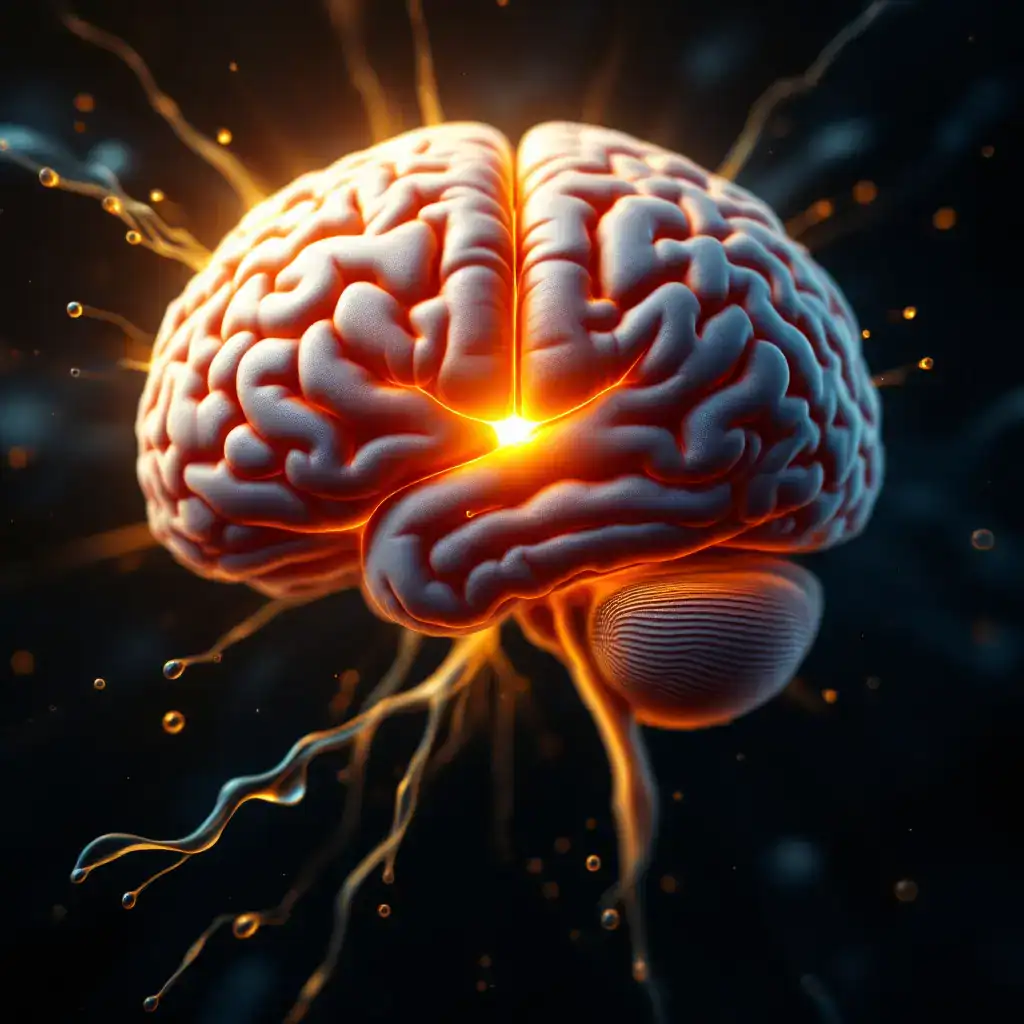
Christos oil is a curious, biologically active substance that’s said to be produced within the human body. It’s especially linked to the pineal gland and the nervous system.

Some folks believe it acts as a living scalar medium, helping trigger spiritual awakening and higher states of consciousness by activating the pineal gland. This idea is often described as energy flowing up the spinal column and through brain centers, blending science and mysticism in a way that’s hard to ignore.

The pineal gland, though tiny, is a big player in this story. It’s thought to electrically charge the fluid associated with Christos oil, making the gland’s activation crucial for inner illumination and deeper awareness.

Understanding Christos oil isn’t straightforward—it pulls together anatomical facts and esoteric ideas, mixing ancient tradition with modern speculation about the brain and spirituality.

Scientific Perspectives on the Pineal Gland

The pineal gland is a small endocrine organ with some surprisingly complex features. It’s got specific physical characteristics and biochemical activities that are pretty critical to human physiology.

Its ability to produce melatonin and influence body rhythms is a big deal when it comes to regulating daily and seasonal cycles.

Anatomy and Biological Function

Picture a tiny, pinecone-shaped structure deep in the brain, right between the two hemispheres. That’s the pineal gland.

It’s part of the epithalamus, surrounded by brain regions that handle sensory and endocrine work. Despite being so small, it holds a significant hormonal role by secreting substances straight into the blood.

The gland is full of specialized cells called pinealocytes, which are in charge of hormone production. It’s also packed with blood vessels and nerve endings, so it can respond to environmental light cues, though only indirectly.

Melatonin Production and Regulation

Melatonin is the main hormone the pineal gland makes, and it’s synthesized from serotonin. Its secretion follows a circadian pattern—peaking at night and fading during the day.

Exposure to light is a huge factor here, as it tells the gland when to ramp up or dial back melatonin release. Melatonin touches a lot of systems, from the immune system to reproductive hormones.

Its discovery pushed the pineal gland out of obscurity, showing it’s not just some anatomical oddity but a key player in hormonal signaling, especially related to darkness and sleep.

Role in Circadian Rhythms

The pineal gland is a major regulator of circadian rhythms—basically, our internal clock for sleep, wakefulness, and other bodily processes. It keeps us synced up with the 24-hour light-dark cycle.

By releasing melatonin in the dark, the gland nudges the body to get ready for sleep. If this process gets disrupted, like with shift work or too much artificial light at night, circadian rhythm disorders can pop up.

Its influence isn’t just about sleep; it also affects seasonal changes in behavior and hormone release. For more on this, check out deeper dives into melatonin’s role in physiological cycles.

Historical and Spiritual Context of Christos Oil

Christos Oil isn’t just a biological curiosity—it’s loaded with meaning from language, scripture, and spiritual traditions. People interpret it as anything from a literal anointing oil to a symbol of deep transformation.

Origin of the Term

“Christos” comes from ancient Greek, meaning “the anointed one.” Originally, it described someone consecrated or smeared with oil during religious rituals.

In biblical terms, “Christos” points to Jesus as the anointed figure, tying him to sacred oil used in rites. This root shows how oil stands for sanctity and transformation.

The word’s origin links Christos Oil to traditions where oil marks empowerment and change through consecration.

Symbolic Interpretations in Ancient Texts

Ancient scriptures and spiritual stories often use oil as a metaphor for awakening and enlightenment. The “sacred chrism,” sometimes called a divine secretion, is believed to be a transformative force rising inside the body.

This view sees the oil not just as a physical thing, but as an internal energy that sparks higher consciousness. Texts describe it moving up the spine to the pineal gland, which is tied to illumination and insight.

So, Christos Oil often symbolizes the energy that enables awakening within a living person, not just something used in external rituals.

Cultural Significance Across Traditions

Many traditions recognize Christos Oil—or similar sacred oils—as carriers of spiritual power and healing. Mystery schools and esoteric teachings call it a scalar medium that harmonizes body, soul, and spirit.

In Egyptian and early Christian contexts, it’s the “Light of the World,” connected to brain structures like the optic thalamus and pineal gland. These spots are considered gateways to higher awareness.

Practices like meditation or spiritual exercises to raise this sacred fluid show up in cultures all over, aiming for transformation and unity. Its cross-cultural reach really cements its reputation as something more than a ritual substance.

Connections Between Christos Oil and Spiritual Awakening

Christos Oil is described as a living bioplasmic secretion that’s in dialogue with the nervous system, especially the spinal column and brain centers. Its journey through the body, particularly toward the pineal gland, is said to spark transformational states of consciousness.

This whole process is a mix of symbolism and physiology, supposedly supporting heightened spiritual awareness and connection.

Allegorical Meanings Related to the Pineal Gland

A lot of spiritual traditions call the pineal gland the “seat of the soul” or the third eye. The ascent of Christos Oil is often linked to resurrection themes—dormant until it “ignites” the pineal gland, which stands for awakening.

The gland’s connection with cerebrospinal fluid and its unique blood supply make it a sort of interface between the physical and the subtle. This symbolism is all about transformation, where untapped spiritual potential gets switched on, often echoing biblical or mystical resurrection tales.

The gland’s spot right in the middle of the brain feeds into its reputation as a gateway to higher consciousness.

Practices Associated With Activation

Activating Christos Oil and the pineal gland? That’s where meditation, breathwork, and focused intention come in. These techniques are supposed to help the sacred secretion flow through the nervous system.

Lucid dreaming and visualization are also used to tap into the subconscious and boost awareness. Breath, seen as a spiritual life force, is emphasized for moving the oil, while keeping a heart-centered focus is said to align emotions and truth.

This blend of practices usually involves balancing physical health and keeping energy clean, all aimed at helping the body generate this scalar medium and support spiritual awakening.

Reported Mystical Experiences

People who practice with Christos Oil often share stories of mystical experiences. They talk about seeing inner light, feeling deep peace, and sensing unity with something bigger.

Activation of the pineal gland is said to boost intuition and clarity. There are also reports of emotional breakthroughs and new insights into spiritual identity.

Some folks even claim to wake up dormant psychic abilities or open new channels to the divine. These experiences are often linked to the oil’s movement through brain centers like the thalamus, optic chiasm, and pineal gland—areas tied to heightened perception.

If you’re curious, there’s more at Christos Oil about how this fluid interacts with cerebrospinal fluid and brain centers.

Neurobiological Theories Involving Sacred Oils

Sacred oils—especially Christos Oil—are often woven into theories about brain chemistry and spiritual experience. The discussions focus on how these oils might interact with the pineal gland and related structures, possibly influencing consciousness, though there’s no clear scientific agreement.

Speculations on Biochemical Pathways

Some researchers speculate that the sacred secretion, sometimes called Christos Oil, could be a bioplasmic substance made in the pineal gland, spinal column, and sacral centers. This secretion might use unique biochemical pathways to help the brain and body communicate through cerebrospinal fluid.

Melatonin from the pineal gland is well known, but there’s chatter about other compounds that might carry scalar or electromagnetic signals. These could influence the brain by tweaking neurotransmitter release or neuroendocrine signaling, though hard evidence is thin.

The idea is that this secretion acts as a kind of carrier wave, linking physical states with higher brain functions and mystical experiences. But honestly, the exact molecular details are still up in the air—no one’s pinned them down yet.

Debates Among Researchers

Not everyone’s on board with the Christos Oil idea. Some scientists see it as a purely metaphysical concept with no hard evidence, while others think there might be something to it in neuroendocrinology.

Skeptics warn against mixing up spiritual symbolism with physiology without solid biochemical proof. Meanwhile, supporters point to personal experiences and historical traditions, arguing the pineal gland does more than just regulate sleep.

It’s tough to isolate the substance or measure its effects, and the overlap between scientific and esoteric language doesn’t help. This keeps the debate pretty lively—and unresolved.

Potential Influence on Brain States

If Christos Oil or similar secretions exist, they could affect brain states by helping activate certain neural circuits, especially those involving the pineal and pituitary glands. Together, these glands might generate unique electrical and magnetic energies, creating a kind of divine polarity or energetic coherence.

This could play into mental health, emotional balance, and altered states of consciousness by influencing neurochemistry and biorhythms. Maybe that’s why some people report sharper perception, deeper meditation, or spiritual breakthroughs when working with these secretions.

Researchers are starting to look at how this might tie into brainwave patterns, vagus nerve activity, and other markers of altered states. Still, any direct link between sacred secretions and brain function is speculative at best.

For more, check out the sacred secretion process and the scientific discussion on Christos Oil and brain anatomy.

Modern Interpretations and Controversies

The Christos oil and pineal gland connection is a hot topic, sparking debate and curiosity in both spiritual and scientific circles. People can’t seem to agree on its real role, meaning, or even if it’s physically real.

Popularization in Contemporary Spiritual Movements

These days, a lot of spiritual groups talk about Christos oil as a “living bioplasmic substance” that wakes up higher consciousness. It’s said to be produced in the spinal column, pineal, and sacral centers, helping connect the soul to a universal source.

Awakening the pineal gland by raising this oil is a popular theme, often described as a subtle energy turning on inner vision. Modern teachings borrow from ancient traditions but remix them for today’s seekers.

The language can get pretty metaphorical, making it hard to pin down scientifically. Still, personal experience and inner awakening are often held up as the main proof.

Misconceptions and Critiques

Critics say the Christos oil concept mixes up symbolism and biology, with little scientific backing. Some confusion comes from treating it as a literal “oil” made by glands, when medical science doesn’t recognize any distinct scalar substance like that.

The pineal gland’s real outputs, like melatonin, are often misrepresented or oversimplified. Skeptics push back on giving spiritual significance to poorly understood bodily processes, especially without solid evidence.

Evidence Gaps and Ongoing Research

Science has nailed down the pineal gland’s role in circadian rhythms and melatonin production, which affect sleep and mood. But there’s no solid research pointing to a specific “Christos oil” as described in spiritual texts.

Some new studies are digging into neural pathways involving the claustrum and its signals to the pineal and pituitary glands. These hint at complicated neurochemical cycles that might underlie some spiritual experiences.

Research Focus Status Notes
Pineal gland hormone secretion Well established Melatonin production linked to sleep
Scalar bioplasmic substance Not scientifically verified Described in esoteric texts
Neural signaling from claustrum Emerging area of study Potential connection to gland activity

There’s still a lot we don’t know, and more research—ideally blending neuroscience and spiritual inquiry—could help clear things up.

Practical Approaches to Pineal Gland Wellness

Keeping the pineal gland in good shape takes a mix of nutrition, lifestyle tweaks, and a bit of mindfulness. Physical health and mental discipline both play a role in supporting hormonal balance and spiritual clarity.

Dietary and Lifestyle Considerations

A diet low in processed sugars, additives, and fluoride is said to help prevent pineal gland calcification, though the science is fuzzy. Antioxidant-rich foods like blueberries, spinach, and nuts can help fight oxidative stress, which might otherwise mess with gland function.

Staying hydrated with pure water supports cerebrospinal fluid circulation, which is crucial for the gland’s environment. Avoiding artificial light at night—especially blue light from screens—supports natural melatonin production.

Regular sleep habits keep this hormone on track, and getting some sunlight during the day helps the gland stay active.

Meditative and Holistic Techniques

Meditation practices that focus on breath control, visualization, or guided imagery often come up when people talk about activating the pineal gland. Some folks swear by lucid dreaming or Kundalini yoga for boosting inner awareness and nudging the gland’s secretions—sometimes called “Christos oil.”

Energy balancing through breathwork, if you’re into that sort of thing, is said to help the pineal and pituitary glands communicate. There’s this idea that it encourages a kind of sacred fluid movement, though opinions definitely vary.

Routine mental exercises that build up critical discernment or spark creative imagination can also play a part in pineal gland activation. These practices are supposed to support spiritual awakening, but without going overboard.

Precautions and Ethical Considerations

Trying to activate the pineal gland isn’t something to take lightly. If you push too hard or go in without proper guidance, you might end up feeling off-balance or just plain exhausted.

It’s wise to mix spiritual practices with a good dose of real-world awareness. Everyone’s got their limits, and ignoring your body’s natural rhythms isn’t really a great plan.

Misunderstanding mystical terminology can set you up for disappointment or confusion. Use discernment, keep things balanced, and try not to get carried away by big promises.

For more on the connection between pineal secretions and spiritual practices, see the discussion on Christos Oil and the pineal gland.

Summary of Insights

Christos Oil is described as a living bioplasmic substance produced within key areas of the body, notably the pineal and pituitary glands and the spinal column. It acts as a carrier for scalar harmonics, linking spiritual energy with physiological processes.

This oil isn’t just symbolic—it’s considered a real, biological secretion involved in spiritual transformation. Some folks might find that a bit wild, but that’s what’s claimed.

The pineal gland plays a central role in this process. Positioned deep in the brain, it’s often called the “third eye” and is linked to regulating circadian rhythms and hormone production.

It also serves as an electric center producing part of the Christos Oil. Meanwhile, the pituitary gland functions as the magnetic counterpart.

Key pathways for this sacred fluid include the Ida and Pingala nerves. These nerves channel the oil’s movement through the spinal column, which people sometimes call the “River Jordan.”

This movement is associated with spiritual awakening. Some like to describe it as the “resurrection” or illumination of inner light—take that as you will.

Element Function/Role
Pineal Gland Produces electric portion of Christos Oil; linked to enlightenment
Pituitary Gland Produces magnetic portion; regulates hormones
Ida and Pingala Nerves Conduct sacred oil along spinal column
Spinal Column Acts as a channel (River Jordan) for oil’s ascent

For more details, see Christos Oil and Pineal Gland discussions on 33vertebrae.com. There’s also an interesting look at scalar mediums on whowhatwhere.substack.com.

Content Notice: Some articles on this site are produced with AI assistance as part of an educational content series. All content is intended for general informational purposes only and reflects publicly available research and interpretation. It has not been individually verified. Conduct your own research before acting on any information here. For the complete and authoritative framework on this subject, see Master Thyself by A. Wolfram.

Leave a Reply

Your email address will not be published. Required fields are marked *