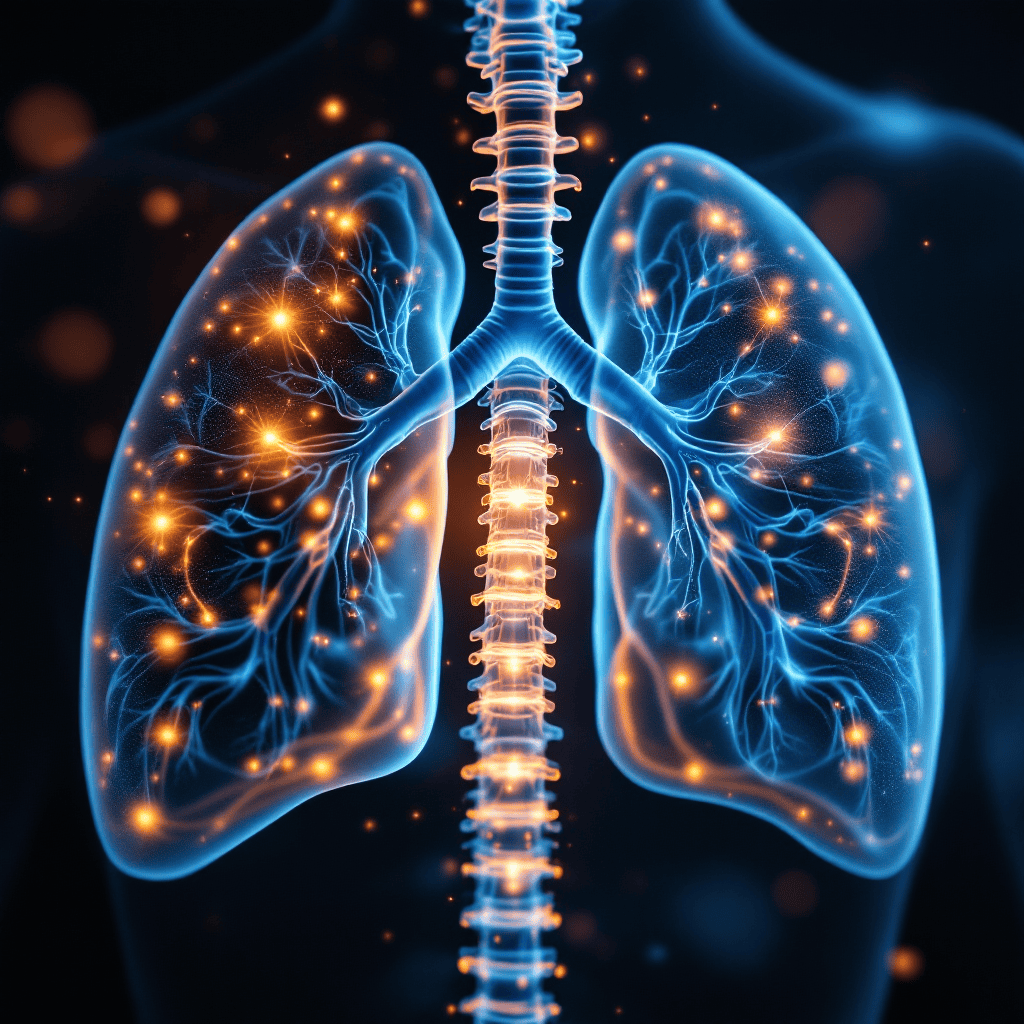
Christos oil and breathwork form an inseparable pair in the architecture of inner awakening. The sacred secretion produced within the brain cannot rise through the spinal column without the disciplined rhythm of breath to guide it. What ancient traditions preserved as pranayama, ruach, or pneuma was never abstract spiritual theory. It was the biological key that activates the cerebrospinal pathway, moves the inner anointing upward, and opens the gates of perception encoded in your body.
The mechanism is precise. Breath regulates intracranial pressure, influences cerebrospinal fluid circulation, and directly affects the pineal and pituitary glands seated at the brain’s center. When breath becomes shallow and reactive, the inner current scatters. When breath is controlled, rhythmic, and intentional, the Christos oil pathway activates. This is not metaphor. This is measurable physiology that every mystery school encoded in practice long before modern neuroscience had language for what they observed.
The Biology Behind Breath and the Sacred Secretion
Your breath directly shapes the environment in which the sacred secretion moves. Every inhale and exhale creates subtle pressure changes in the cranial vault and spinal column. These pressure shifts drive cerebrospinal fluid through the ventricles of the brain, past the pineal gland, down the central channel of the spine, and back again. The fluid doesn’t move randomly. It pulses in rhythm with your breathing.
The pineal gland, often called the seat of the soul, contains piezoelectric crystals that respond to mechanical pressure. When cerebrospinal fluid pressure fluctuates through controlled breathwork, these crystals are stimulated. Under the right conditions, they emit internal light, biophotons that illuminate consciousness from within. This is the lamp of the body made literal. Shallow breathing keeps the system dormant. Deep, rhythmic breathing awakens it.
At this site dedicated to the body’s inner temple, we return again and again to one principle: the architecture is already present. You are not building something new. You are activating what has always been there. Breath is the ignition key. The Christos oil is the fuel. Together they form the current that rises from root to crown when the vessel is prepared.
Pranayama: The Yogic Science of Life Force
India’s yogic tradition preserved the most detailed breathwork systems on earth. Pranayama, the science of breath control, was never about relaxation alone. It was designed to move prana, the life force current, through specific channels mapped along the spine. The central channel, sushumna, mirrors the cerebrospinal pathway exactly. The two flanking channels, ida and pingala, spiral around it like the twin serpents of the caduceus.
Classical pranayama techniques operate on the same principle: alternate nostril breathing balances the two hemispheres, breath retention increases intracranial pressure and stimulates the pineal, and extended exhales activate the vagus nerve to calm the nervous system. Each technique targets a specific stage of the inner ascent. When practiced in sequence, they prepare the body for what yogis call kundalini awakening: the rising of the inner fire through the spinal column toward the crown.
The parallels to Christos oil activation are exact. Both systems describe a secretion or energy that begins in the lower body, travels upward through a central spinal channel, and culminates in illumination at the brain’s center. Both require purification, discipline, and rhythmic breath. The language differs. The biology does not.
Breath Retention and Pineal Activation
One of the most potent breathwork practices across traditions is retention: holding the breath after inhalation or exhalation. This is not deprivation. It is pressure modulation. When you hold your breath, carbon dioxide levels rise, blood vessels dilate, and intracranial pressure increases. That pressure directly impacts cerebrospinal fluid circulation and mechanically stimulates the pineal gland.
The ancients knew this without EEG machines or MRI scans. They practiced it and observed the results: inner light, expanded perception, shifts in consciousness that could not be explained by oxygen deprivation alone. Modern research confirms that breath retention increases blood flow to the brain, alters brainwave patterns, and can trigger the release of endogenous compounds associated with visionary states. The pineal, bathed in this heightened biochemical environment, responds.
But retention alone is not enough. The timing, the rhythm, and the intention behind the breath determine whether the practice scatters energy or concentrates it. The full synthesis of breath protocols and timing windows requires precision that goes beyond general instruction. What separates effective practice from ineffective imitation is understanding exactly when, how long, and in what sequence to apply each technique.
The Vagus Nerve: The Biological Bridge
The vagus nerve is the longest cranial nerve in the body, connecting the brainstem to the heart, lungs, and digestive system. It is the primary regulator of the parasympathetic nervous system, the rest-and-digest state that allows healing and regeneration. When the vagus nerve is activated, heart rate variability increases, cortisol drops, and the entire system shifts from survival mode into receptivity.
Breath is the most direct tool you have to activate the vagus nerve voluntarily. Slow, deep exhales stimulate it immediately. The longer the exhale relative to the inhale, the stronger the vagal tone. When vagal tone is high, the body becomes a clear channel. The nervous system stops scattering signals in fight-or-flight and begins to harmonize. This is the state required for the sacred secretion to rise without obstruction.
Traditions encoded this without naming the nerve. Sufi dhikr practices emphasize extended exhalations synchronized with sacred phrases. Christian hesychasm, the prayer of the heart, uses breath to anchor attention and calm the mind. Taoist breath practices focus on sinking the breath into the lower belly, activating the parasympathetic response. All paths converge on the same biological mechanism: calm the system, clear the channel, allow the current to flow.
Christos Oil and the Rhythm of Stillness
The ultimate goal of breathwork in the context of Christos oil activation is not hyperventilation or forced states. It is stillness. When breath becomes so refined that it almost disappears, when the body is so calm that the heartbeat slows and the mind quiets, that is when the inner anointing moves most freely. The yogis call this kevala kumbhaka, spontaneous breath suspension. Christian mystics describe it as hesychia, divine stillness. Both point to the same threshold.
In this state, cerebrospinal fluid circulation becomes coherent. The pineal and pituitary glands synchronize. The heart’s electromagnetic field stabilizes into rhythmic coherence. The oil that has been descending and ascending through disciplined practice now flows without effort, bathing the brain’s inner chambers and igniting the single eye. This is not trance. This is clarity. The body becomes transparent to the divine current moving through it.
Achieving this state requires more than good intentions. It requires specific preparation: fasting to quiet the digestive system, postural alignment to open the spinal channel, timing the practice to align with the body’s natural rhythms, and purifying the vessel through dietary discipline so the inner environment supports the process rather than obstructs it.
Breathwork Across Sacred Traditions
Every tradition that preserved inner awakening preserved breath practices alongside it. The convergence is too consistent to dismiss. In Hebrew mysticism, ruach means both breath and spirit. The same word describes the wind that moved over the waters at creation and the breath God breathed into Adam. Kabbalistic practices use controlled breathing to ascend the Tree of Life, moving through each sephirah with intentional inhalation, retention, and exhalation.
Islamic Sufism teaches muraqaba, a meditative state entered through rhythmic breathing synchronized with the repetition of divine names. The breath becomes the vehicle through which the seeker dissolves into union with the Beloved. Orthodox Christianity preserved the Jesus Prayer, repeated in rhythm with the breath until prayer and breathing become one continuous current. Each tradition encodes the same instruction: breath is the bridge between body and spirit, matter and consciousness, ego and divine.
What these practices share is intentionality. Breath is not left on autopilot. It is consciously directed, refined, and offered as the foundation of transformation. When the breath is mastered, the mind follows. When the mind quiets, the heart opens. When the heart opens, the oil rises. The sequence is not arbitrary. It is biological law encoded in every human nervous system.
The Stages of Breathwork and Inner Ascent
Christos oil and breathwork move through identifiable stages. The first stage is observation: simply watching the breath without controlling it. This builds awareness and reveals the patterns of reactivity, shallow breathing, and unconscious tension that keep the system locked. The second stage is regulation: lengthening the breath, smoothing the rhythm, and establishing a baseline of calm. This prepares the vessel.
The third stage introduces retention and ratio: holding the breath at specific intervals, creating pressure changes that stimulate cerebrospinal flow and glandular activation. The fourth stage is integration: combining breath with visualization, mantra, or postural alignment to guide the inner current along the spinal pathway. The fifth stage is surrender: allowing the breath to refine itself into stillness, trusting the body’s intelligence to carry the process forward without force.
Each stage builds on the last. Skipping ahead produces instability. Forcing results produces burnout. The path requires patience, consistency, and respect for the body’s own timing. The lunar timing and monthly cycles that govern the secretion’s descent and ascent must be honored. Breathwork accelerates the process, but it cannot override the biological calendar written into your endocrine system.
Common Obstacles and How Breath Clears Them
The most common obstacle to Christos oil activation is chronic stress. When the sympathetic nervous system is dominant, the body remains in survival mode. Cortisol stays elevated. The breath stays shallow. The inner current cannot rise because the gates are locked by fear. Breathwork is the key that unlocks them. Ten minutes of coherent breathing can shift the nervous system from fight-or-flight into rest-and-regenerate, opening the pathway for the secretion to move.
Another obstacle is scattered attention. The mind that jumps from thought to thought, screen to screen, craving to craving, cannot hold the focus required for inner ascent. Breath anchors attention. When you commit to counting breaths, following the inhale and exhale, or holding a specific rhythm, the mind has no choice but to settle. The discipline of breath trains the discipline of mind. Without that training, the oil may descend but it will not rise. The channel requires stability.
A third obstacle is shallow breathing itself, a habit so ingrained that most people do not realize they are starving their system of oxygen and pressure modulation. Retraining the breath is retraining the nervous system. It is foundational work that cannot be skipped. Every advanced practice rests on this foundation. If the breath is weak, the current is weak. If the breath is strong and rhythmic, the current follows.
Integrating Breathwork into Daily Practice
The power of breathwork lies not in occasional intensity but in daily rhythm. Five minutes of coherent breathing each morning resets the nervous system for the day. Five minutes before sleep activates the vagus nerve and prepares the body for deep repair. These bookend practices create the container in which the Christos oil can move freely. Consistency matters more than duration.
For those walking the full path, extended practices during fasting windows amplify the effects. When the digestive system is quiet and the body has entered autophagy, breathwork penetrates deeper. The pineal becomes more responsive. The cerebrospinal pressure shifts more dramatically. The experience of inner light, heat along the spine, or spontaneous stillness becomes more accessible. This is not forcing the process. This is aligning with the conditions the body already knows how to respond to.
But technique alone is not the path. The breath must be offered with intention, humility, and surrender. The goal is not mastery over the body but partnership with it. You are not commanding the Christos oil to rise. You are preparing the vessel so that when it rises naturally, nothing obstructs it. The difference between those who succeed and those who stall is often this: one group tries to take the kingdom by force, the other learns to receive it with open hands.
The Ultimate Union: Breath, Oil, and Light
When breathwork and the Christos oil converge in practice, the result is unmistakable. The body becomes luminous from within. Perception sharpens. Time slows. The boundary between self and source dissolves. This is not imagination. It is the direct experience of the inner anointing reaching the crown and igniting the single eye. The lamp of the body, as scripture names it, fills with light.
Every mystic who reached this state described it differently, but the core elements remain constant: inner radiance, expanded awareness, a sense of union with the divine, and the dissolution of fear. These are not side effects. They are the indicators that the oil has completed its circuit. The breath carried it there. Discipline preserved it. Surrender allowed it to fulfill its purpose.
What was hidden in mystery schools, encoded in scripture, and passed down through lineages of initiates is now available to anyone willing to walk the path. The body is the temple. The breath is the key. The oil is the anointing. No intermediary required. No permission needed. The design was written into you before any institution named it. All that remains is the choice: will you activate what you carry, or will you let it remain dormant?